How to Get an Apartment in Tokyo as a Foreigner
A first-hand guide to renting an apartment in Tokyo as a foreigner: the sites to use, how to dodge key money and deposits, and why looking one neighbourhood out saves you a fortune.
When I first moved to Tokyo, the thing that nearly broke me wasn’t the language or the trains. It was the rent.
I started where most people start, looking at short-term and serviced apartments, the kind that advertise to foreigners in English. The prices were insane. We’re talking ¥300,000 to ¥400,000 a month for something small, in a building full of other foreigners paying the same premium for the privilege of not having to read a Japanese lease. I remember sitting in a café doing the maths and realising that if I kept this up, I’d burn through my savings before I’d even figured out where the good ramen was.
So I did what I should have done from the start. I learned how Japanese people actually rent apartments, and I went looking for one of those.
Start on the Japanese sites, even if you can’t read them
The two big rental sites in Japan are SUUMO and Homes (homes.co.jp). This is where the real inventory lives, the apartments Japanese renters see, at Japanese prices. The foreigner-facing sites are a small, expensive slice of the market sitting on top of this much larger one.
Yes, they’re in Japanese. But you don’t need to be fluent to use them. Run the pages through your browser’s translate function, or just learn the dozen or so kanji that matter (rent, size, station, deposit). The map search is intuitive even if you can’t read a word. Spend an evening on these and you’ll understand the actual market far better than any English summary will give you.
The single most useful thing you can do on these sites is filter on no key money and no deposit. Let me explain why that matters so much.
The fees that ambush you: key money and deposit
Japanese rentals have two upfront costs that don’t really exist back home, and together they can double your move-in bill:
- Key money (礼金, reikin): a “thank you” gift to the landlord that you never get back. Often one to two months’ rent, handed over for nothing.
- Deposit (敷金, shikikin): the security deposit, usually one to two months. You get some of this back, in theory, minus cleaning and repairs.
Stack those on top of the first month’s rent, an agency fee (typically another month), and a guarantor company fee, and a ¥150,000 apartment can cost you ¥600,000 or more just to walk in the door.
The good news: a growing number of listings now waive key money, and some waive the deposit too. On SUUMO and Homes, filter for 礼金なし (no key money) and 敷金なし (no deposit). It instantly cuts your move-in cost and quietly tells you which landlords are competing for tenants rather than coasting. I’d rather a slightly higher monthly rent with zero key money than the reverse, because that key money is just gone.
The site that actually got me my apartment: GaijinPot
Here’s the honest middle path. The pure-Japanese sites have the best prices but the most friction (some landlords still won’t rent to foreigners, and the paperwork assumes you’re fluent). The foreigner-relocation companies are easy but brutally expensive.
GaijinPot Apartments sits right in between, and it’s where I found my place. The listings are in English, the landlords on there have already agreed to rent to foreigners, so you skip the soul-crushing experience of being rejected for your passport, and crucially, the prices are close to the real Japanese market rather than the inflated foreigner premium.
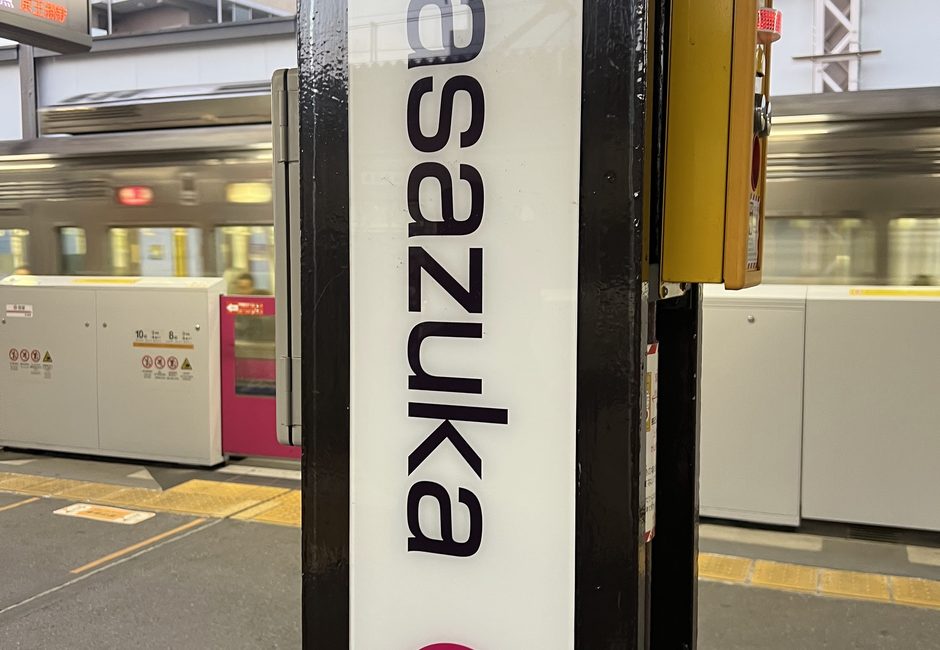
That’s where I found our apartment in Sasazuka: ¥200,000 a month for a genuinely nice place, which for what we got was a great deal. My wife and I set up our life there, one stop from Shinjuku on the Keio Line, and I never once regretted not paying the relocation-company tax.
The real trick: look one neighbourhood out
This is the part I wish someone had told me on day one.
I spent my first weeks fixated on the neighbourhoods everyone falls for. Nakameguro, with its canal and its cafés. Shimokitazawa, all vintage shops and live houses. Ebisu, polished and central. I looked at apartments in all three and the prices just laughed at me. You pay a heavy premium to have the cool address on your mail.
Then I started looking a little further out, and everything changed. Sasazuka is one stop past Shinjuku on the Keio Line. It is not on anyone’s “coolest neighbourhoods in Tokyo” list, and that’s exactly why it’s affordable. But here’s the thing nobody tells you: in Tokyo, “a little further out” might mean ten extra minutes on a train. I was still in Shinjuku in the time it takes to drink a coffee. Shimokitazawa was a short hop away whenever I wanted it. I got the local, lived-in version of Tokyo, residential streets, a station with great cheap food, neighbours who knew me, for a fraction of what the postcard neighbourhoods wanted.
The coolest neighbourhood is rarely the smartest place to actually live. Find the unglamorous stop one or two stations beyond it. You keep all the access and lose most of the rent.
My short version
If I were doing it all again from scratch:
- Ignore the expensive foreigner short-term rentals unless you genuinely need somewhere for a few weeks.
- Spend an evening on SUUMO and Homes to learn what the real market costs, filtering hard on no key money and no deposit.
- Search GaijinPot Apartments for places that are foreigner-friendly but still priced like the local market.
- Don’t chase the famous neighbourhood. Look one or two stops out from it, and let the train do the rest.
That’s how I ended up in Sasazuka, paying a fair price, ten minutes from everything, in the version of Tokyo I actually wanted to live in.
I’ll be adding photos of the apartment and the Sasazuka streets around it soon, along with more on what daily life out there was actually like. For the neighbourhood itself, start with the Sasazuka places on the map.
Places in this guide
Photos show the actual places, licensed under Creative Commons and credited to their photographers.


Find hotels in Sasazuka
Browse live availability and compare prices for your dates.
See hotels near Sasazuka on Booking.comPrices are for the night of Saturday 31 October. You can change the dates on Booking.com. If you book, Roam Tokyo earns a small commission from Stay22 at no extra cost to you.