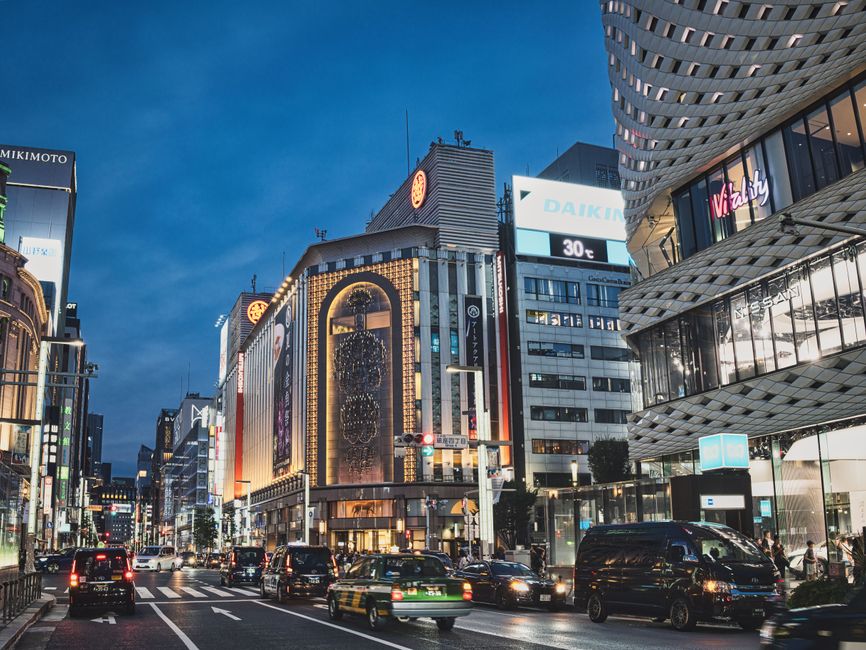
Where to Stay in Ginza, Tokyo
Ginza accommodation guide: luxury hotels, business hotels, and practical tips for staying in Tokyo's most upscale shopping district.
Where to Stay in Ginza, Tokyo
Ginza is Tokyo’s most prestigious shopping and dining district, where you’ll find everything from Hermès to humble ramen shops tucked beside Michelin-starred restaurants. Staying here puts you at the heart of Tokyo’s luxury scene, but it comes with a price. Here’s what you actually need to know about accommodation in Ginza, broken down by what different travelers should realistically expect.
Understanding Ginza Before You Book
Ginza isn’t a neighborhood where you stay to experience “real Tokyo.” It’s where you stay for shopping, fine dining, and easy access to central Tokyo. The streets are wide, immaculate, and lined with flagship stores. On weekends, the main Chuo-dori street becomes pedestrian-only and fills with well-dressed shoppers. It’s beautiful, but it’s expensive, and quiet.
If you’re coming to Tokyo for cheap eats and underground culture, Shimokitazawa or Koenji will be more your speed. But if you want to be in the commercial heart of Tokyo, walk to luxury restaurants, and have Hermès and Gucci on your doorstep, Ginza delivers exactly that.
The main consideration: Ginza is expensive to stay in, but it’s cheaper than similar neighborhoods in Paris or London. Business hotels here start around 12,000 yen per night (roughly USD 85), while high-end properties run 80,000 yen and up. There are essentially no budget capsule hotels or cheap guesthouses in Ginza proper, unlike other Tokyo neighborhoods.
Luxury and Upper-Midrange Hotels in Ginza
The Ginza District’s Premium Options
The Ginza Tokyu Hotel sits directly on the Ginza shopping street, which means street-facing rooms get views of the neon and foot traffic. It’s a solid four-star option at around 50,000-70,000 yen per night, and you can literally walk downstairs and be shopping. The rooms are modest in size (around 30 square meters), but that’s standard for Tokyo luxury.
Nearby, the Mitsukoshi Hotel sits above the historic Mitsukoshi department store. You’re paying partly for convenience and partly for heritage, as this location has been prime real estate since the Meiji period. Expect 60,000-80,000 yen per night.
If you want to spend serious money, the Ritz-Carlton Tokyo sits in the Roppongi Hills complex, about a 10-minute walk from Ginza proper. It’s technically Roppongi, not Ginza, but it feels adjacent. Rooms start around 150,000 yen and include views of Tokyo Bay and the city sprawl. The service is impeccable, and the restaurants are genuinely excellent.
For modern luxury with a design focus, the Okura Prestige Tokyo (also in Roppongi, walking distance to Ginza) offers contemporary Japanese aesthetics. It’s newer than the Ritz-Carlton and slightly more personal. Budget 120,000-150,000 yen per night.
The Real Question: Is Ginza Luxury Worth It?
Honest answer: probably not if you’re just sleeping there. Tokyo hotel rooms are small, and you’re paying premium prices for the address. The Ritz-Carlton Tokyo or Okura Prestige Tokyo are genuinely excellent hotels with outstanding service, but you’ll pay 40-50% more than you would for a comparable hotel in Shinjuku or Shibuya, which are only a 5-10 minute train ride away.
If you specifically want to eat dinner in Ginza and stumble back to your hotel on foot, or if you have business in Ginza, then staying here makes sense. If you’re visiting Tokyo for general sightseeing, you’re better off in Shinjuku or Shibuya and using Ginza for day visits.
Midrange and Business Hotels in Ginza
Best Value in the District
The Hotel Gracport Ginza offers clean, efficient rooms at around 18,000-25,000 yen per night. It’s a business hotel (think compact but tidy), which is exactly what you get. No frills, good wifi, and you’re steps from Ginza Station.
Dormy Inn Premium Ginza is another reliable option, typically around 20,000-30,000 yen. Dormy Inn is a Tokyo chain that appears throughout the city. Their formula is predictable: small rooms, but clean and efficient. This location is near Higashi-Ginza Station on the Asakusa Line. Many Dormy Inns include a small onsen bath (hot spring bath) on the upper floor, which is a genuinely nice feature after a day of walking.
The APA Hotel Ginza-Kabukiza keeps rooms around 16,000-22,000 yen. APA Hotels are everywhere in Tokyo, and they’re the budget workhorse. Expect minimal decoration, adequate space, and fast wifi. It’s not luxurious, but it’s honest value.
For something slightly more atmospheric, the Hotel Graphy Ginza (around 30,000-40,000 yen) is a smaller property with design-forward rooms. It’s not as established as the luxury chains, but it’s genuine Tokyo modern without the corporate polish.
Train Access from Ginza Hotels
This matters more than you might think. Ginza Station (intersection of multiple lines) is one of Tokyo’s main hubs, which is great. You have direct access to the Ginza Line (toward Asakusa), Marunouchi Line (toward Tokyo Station and west), and Hibiya Line (toward Roppongi).
Higashi-Ginza Station (Asakusa Line and Oedo Line) is on the eastern edge of Ginza, near the kabuki theater. It’s quieter and less crowded than Ginza Station proper.
Both stations are within 5-10 minutes walk of the main shopping streets, so any hotel in Ginza is reasonably close to a train connection.
Practical Ginza Accommodation Tips
Room Size Reality Check
Tokyo hotel rooms are small. A “standard” double room in a business hotel is typically 20-25 square meters. The Ritz-Carlton’s standard rooms are around 50 square meters, which feels spacious by Tokyo standards but would feel tight in most Western cities. If you need space, ask for a deluxe or suite. If you’re solo, a business hotel room is perfectly adequate.
Ginza Is Quieter Than You’d Expect
The main shopping streets can be busy during the day, but once you’re a block off Chuo-dori, it’s residential and quiet. If you’re sensitive to noise, don’t worry about staying here. Unlike Shibuya or Shinjuku, Ginza doesn’t have nightlife-driven noise. The trains stop running around midnight, and the neighborhood is peaceful after that.
Breakfast Considerations
Most business hotels (Dormy Inn, APA, Toyoko Inn) include Japanese breakfast, which typically means grilled fish, miso soup, rice, pickles, and nori (seaweed). It’s excellent value and genuinely filling. High-end hotels usually charge 3,000-5,000 yen extra for breakfast, and their offerings are fancier but not necessarily better.
If you prefer Western breakfast, there are numerous cafes around Ginza, but they’ll cost 1,500-3,000 yen for coffee and toast.
Ginza Dining Expectations
Staying in Ginza means you’re near some of Tokyo’s best restaurants. Michelin-starred sushi places, omakase counter seats, and kaiseki restaurants all cluster here. The trade-off: a meal at a top-tier restaurant runs 15,000-50,000 yen per person. Mid-range restaurants (good quality, not Michelin-starred) are around 5,000-8,000 yen for dinner.
Convenience stores (7-Eleven, Lawson, FamilyMart) are excellent for budget meals. A decent onigiri (rice ball) runs 150-300 yen, and hot food is usually under 500 yen.
Getting Around Tokyo from Ginza
One reason to stay in Ginza is that it’s centrally located on the train network. From Ginza Station:
- Asakusa: 2 stops on the Ginza Line (about 10 minutes), then walk to Sensoji Temple.
- Shinjuku: 8 stops on the Marunouchi Line (about 15 minutes).
- Roppongi: 3 stops on the Hibiya Line (about 8 minutes).
- Tokyo Station: 2 stops on the Marunouchi Line (about 5 minutes).
- Shibuya: 7 stops on the Hibiya Line (about 20 minutes).
The Suica/Pasmo IC card system works everywhere, and you just tap on and off at gates. Load one at any station ticket machine (deposit 2,000 yen, 1,500 is usable credit).
Day trips to Nikko, Kamakura, or Mt. Fuji are all easily accessible from Tokyo Station, which is just two stops away.
When to Book and Best Times to Visit Ginza
Cherry Blossom Season (Late March to Early April)
This is peak season everywhere in Tokyo. Book 3-4 months in advance. Ginza itself doesn’t have famous cherry trees, but the nearby Imperial Palace grounds and Hibiya Park (a short walk away) have good blossoms. Hotels fill up across the city, so expect higher prices and fewer availability.
Autumn (November)
This is genuinely the best season to visit Tokyo. The weather is cool and crisp, crowds are moderate, and the light is beautiful. Hotels in Ginza are busy but not impossible to book a few weeks in advance. Prices are higher than summer but lower than cherry blossom season.
Summer (July-August)
Genuinely hot and humid. Prices are lower than other seasons, and if you can handle the heat, it’s less crowded. Many accommodations offer summer discounts.
Winter (December-February)
Cold but rarely snowy. Christmas illuminations light up Ginza’s streets in December, which is beautiful. January 1-3 sees many closures (New Year’s break), so avoid these dates. Prices drop significantly outside holiday weeks.
Should You Stay in Ginza? A Summary
Stay in Ginza if:
- You have business in the district or nearby.
- You want to eat at high-end restaurants and need walkability.
- You want to experience Tokyo’s luxury shopping in an immersive way.
- You’re visiting for 1-2 nights and want a central location.
Skip Ginza and stay elsewhere if:
- You’re budget-conscious (other neighborhoods offer better value).
- You want to experience “real Tokyo” neighborhood life (Shimokitazawa, Koenji, Sangenjaya are better).
- You want nightlife and young-crowd energy (Shibuya, Shinjuku are better).
- You’re staying longer than 3 nights (consider a more residential neighborhood).
Ginza is genuine Tokyo luxury, but it’s also expensive, quiet, and focused on shopping and fine dining. Choose it intentionally, not by default.
Related Reading
- What Nobody Tells You About Staying in Tokyo (pillar)
- First Time in Tokyo: The Best Neighborhood to Stay In
- Where to Stay in Asakusa, Tokyo: A Local’s Guide to Every Hotel Type
Frequently Asked Questions
What’s the cheapest hotel in Ginza?
The APA Hotel Ginza-Kabukiza typically offers the lowest rates in the district, starting around 16,000 yen per night. However, even budget hotels in Ginza cost significantly more than comparable properties in Shibuya, Shinjuku, or Ueno. If you’re traveling on a tight budget, those neighborhoods offer better value.
Is it worth staying in Ginza for one night?
Only if you specifically need to eat dinner in Ginza and want to avoid a late-night train ride home. For a quick night’s stay, you’re paying a premium for location convenience rather than the experience of the neighborhood. Consider Shibuya or Shinjuku, which are 10-15 minutes away by train and offer similar hotel quality at lower prices.
How far is Ginza from the airport?
From Haneda Airport, take the Keikyu Express train directly to Shinbashi Station (about 15 minutes), then walk or transfer to the Ginza Line for one more stop. Total time is usually 20-25 minutes. From Narita Airport, it’s about 1 hour via the Narita Express to Tokyo Station, then a short walk to Ginza. Haneda is much more convenient if you have a choice.
Find hotels in Ginza
Browse live availability and compare prices for your dates.