Where to Stay in Nakameguro, Tokyo
Guide to staying in Nakameguro: boutique hotels, ryokan, and apartments. Canal-side neighborhood near Shibuya with excellent dining and design.
Where to Stay in Nakameguro, Tokyo
Nakameguro is one of Tokyo’s quietest luxury neighborhoods, and it’s the kind of place where staying there transforms how you experience the city. Unlike the frenetic energy of Shinjuku or Shibuya, Nakameguro trades tourist bustle for a genuinely livable vibe. The Meguro River runs through the heart of the neighborhood, lined with independent cafes, design boutiques, and izakayas that feel more like local secrets than tourist attractions. If you want to sleep somewhere that doesn’t feel like a hotel experience, but rather like living in Tokyo for a few days, this is the neighborhood for you.
The catch: Nakameguro is expensive, both for accommodation and for everything around it. You’re paying for the location, the aesthetic, and the fact that your neighbors are likely designers, expat professionals, and old-money Tokyo residents. But if you’ve budgeted for it, staying here gives you something most Tokyo visitors never get: a sense of being a resident rather than a tourist passing through.
Accommodation Types in Nakameguro
Nakameguro doesn’t have the massive chain hotels you’ll find in Shinjuku or the dense cluster of budget options near Shibuya. Instead, the accommodation here breaks down into three clear categories, and your choice depends entirely on what kind of stay you want.
Boutique hotels are the standard option. These are typically 30-80 room properties with a strong design focus, usually occupying a specific architectural concept or design philosophy. Many are former luxury residences or completely rebuilt modern structures. They tend to have excellent bars or restaurants on the ground floor, small fitness facilities, and the kind of service that anticipates what you need before you ask. Expect to pay 25,000-50,000 yen per night for a decent room, often more during peak seasons. These places book solid during cherry blossom season and Golden Week, sometimes 3-4 months in advance.
Furnished apartments and serviced residences are becoming more common in Nakameguro, particularly in the side streets away from the main canal. These range from studio apartments to two-bedroom setups and appeal to travelers staying 5-30 days. They typically have kitchens, washing machines, and actual living space rather than just a sleeping area. Prices range from 12,000-35,000 yen per night depending on size and location, but often offer better value for longer stays. The trade-off is less daily service and sometimes a less central location within the neighborhood.
Traditional ryokan inside Nakameguro proper are genuinely rare. Tokyo’s ryokan scene is concentrated in the outer areas like Hakone or Nikko, where the mountain setting actually justifies the traditional inn experience. If you want the kimono-wearing, kaiseki-dinner ryokan experience, you’re better off doing that as a day trip from Nakameguro rather than looking for one in the neighborhood itself.
The Canal Strip and Hotel Locations
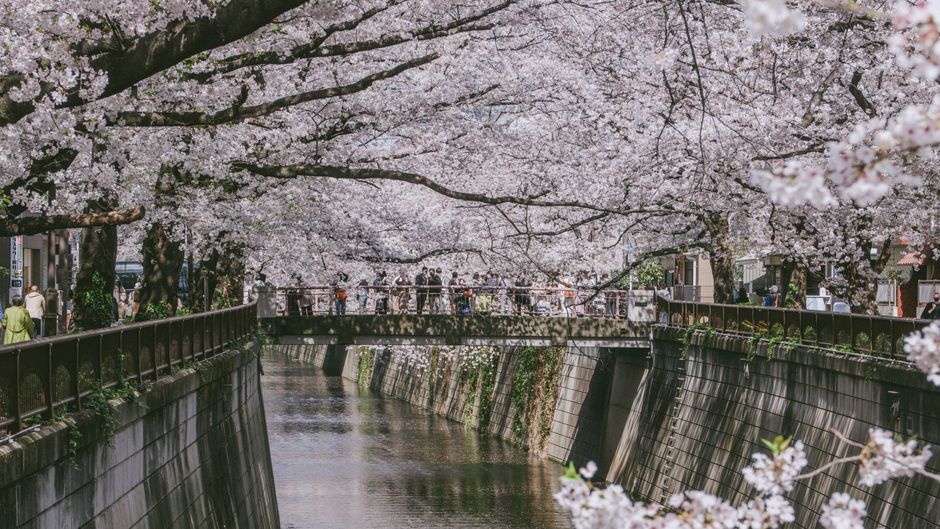
The Meguro River canal runs through Nakameguro like the neighborhood’s spine, and this is where you’ll find most of the accommodation options. The canal walk is genuinely beautiful, especially during cherry blossom season in late March and early April when the trees hang over the water and many restaurants set up open-air seating. In autumn, the foliage reflects in the water at dusk, and it’s one of Tokyo’s underrated viewing spots, far less crowded than Ueno Park but equally atmospheric.
Hotels directly along the canal command premium pricing because of this aesthetic value. You’re paying extra for a canal view or a ground-floor cafe terrace where you can sit with coffee in the morning and watch Tokyo’s creative class go by. Some of these places are Instagram-famous now, which means they’re busier than they were five years ago but still far less crowded than Harajuku or Roppongi.
The backstreets behind the canal, running north toward Daikanyama, are equally worth exploring and often have better value. You lose the immediate canal access but gain proximity to some of Nakameguro’s best izakayas and small bars. These streets feel like actual Tokyo neighborhoods rather than designated tourist areas. If you’re willing to walk 5-10 minutes to the canal, you’ll find accommodation that’s 20-30% cheaper and usually has better personality.
Practical Access: Train Lines and Connections
Nakameguro station sits on the Tokyu Toyoko Line, and this is one of the neighborhood’s biggest advantages. The station itself is well-designed, modern, and easy to navigate without the chaos of larger hubs like Shibuya or Shinjuku.
From Nakameguro station, you have direct access to Shibuya in 5 minutes, which means you can stay in Nakameguro’s quiet, sophisticated environment and reach Shibuya’s restaurants, shopping, and nightlife whenever you want. This combination is genuinely hard to find. The Tokyu Toyoko Line also connects directly to Yokohama in about 30 minutes if you’re interested in a day trip.
Getting to Shinjuku from Nakameguro takes about 20 minutes (change at Shibuya to the JR Line), and getting to Tokyo Station takes about 25 minutes via the same route. These aren’t long journeys by Tokyo standards, and the trains run frequently enough that you don’t need to overthink transit timing.
If you’re planning day trips outside Tokyo, the Tokyu Toyoko Line connects to the Minato Mirai Line in Yokohama, which is useful, but for trips to Mt. Fuji (Hakone), Nikko, or Kamakura, you’ll want to head to Shibuya or Tokyo Station to access the main train lines. This is still convenient enough, but not as seamless as staying directly on the Yamanote Loop.
Dining and Neighborhood Experience
One of the best reasons to stay in Nakameguro is the food scene. The canal strip has excellent cafes and light dining spots, but the real Tokyo experience happens in the backstreets, particularly in the area between Nakameguro station and Daikanyama.
The neighborhood has multiple izakaya alleys (yokocho) tucked behind main streets, places that feel like they’ve been operating the same way for 20-30 years. These are genuinely authentic Tokyo experiences: narrow rows of tiny bars and restaurants, each holding maybe 10-15 people, where salarymen, local residents, and increasingly, travelers with good recommendations end up together at the bar counter. Budget 3,000-6,000 yen per person for dinner with drinks. These places don’t take reservations, and they don’t have English menus, but the staff are patient with foreigners and you can point to what other customers are eating.
Western-style restaurants are more abundant in Nakameguro than in most Tokyo neighborhoods, which is unusual and useful if you need a break from Japanese cuisine. This is because the neighborhood attracts expat residents and international designers who prefer to have dining options beyond ramen shops. It’s a subtle but real difference from other areas.
Convenience stores (7-Eleven, Lawson, FamilyMart) are everywhere, and the food quality is genuinely good. If you’re staying in an apartment with a kitchen, you can grab quality ingredients and snacks without needing to venture far. If you’re in a hotel, the convenience stores are perfect for picking up drinks and late-night snacks.
The Setagaya street (running east-west through the neighborhood) has decent lunch options and smaller restaurants where you can eat well for 1,000-2,000 yen at lunch time. This is significantly cheaper than dinner at the same restaurant.
Best Times to Visit and Seasonal Considerations
Spring (cherry blossom season, late March to early April) is peak season for Nakameguro accommodation. The Meguro River blooms spectacularly, with hundreds of cherry trees creating a canopy over the canal walkway. Evening walks are magical. But this also means hotels book 3-4 months in advance and charge peak-season rates (often 40-50% above regular rates). If cherry blossoms are your priority, book in January.
Autumn (November) is genuinely the best time to stay in Nakameguro. The weather is cool and crisp, the foliage is beautiful without being as overwhelming as cherry blossom season, and accommodation is still available on relatively short notice. The neighborhood’s natural atmosphere feels even more pronounced in autumn. Prices are normal to slightly elevated but nowhere near cherry blossom premium.
Summer (July-August) is hot and humid in Tokyo, and Nakameguro is no exception. This is when many local residents who can afford it leave the city. Accommodation is cheaper and easier to find, but you’ll be enduring 35-degree heat and high humidity. The upside: fewer tourists and better availability at restaurants and cafes.
Winter (December-February) is cold but rarely snowy in central Tokyo. The neighborhood’s lighting looks beautiful in December with shop and restaurant decorations. January 1-3 everything closes for New Year’s, so timing around this period requires planning. Prices are low, availability is high, and the neighborhood feels quiet and livable.
Booking Strategy and Price Expectations
Nakameguro accommodation books differently than other Tokyo neighborhoods. There’s no massive cluster of budget options, so you can’t just arrive and find last-minute deals the way you can in areas like Ikebukuro or Ueno. Planning ahead is essential, particularly for peak seasons.
Use a combination of booking platforms: standard international ones (Booking.com, Agoda) list most properties, but Japanese booking sites (Rakuten Travel, Jalan) sometimes have exclusive Japanese properties with better prices. Some high-end boutique hotels have direct booking on their own websites with better rates than OTA (Online Travel Agency) platforms.
Expect price ranges as follows: budget option with shared bathroom in an apartment building, 8,000-12,000 yen per night; standard boutique hotel room, 25,000-40,000 yen per night; high-end boutique hotel, 50,000+ yen per night; serviced apartments with kitchen, 15,000-30,000 yen per night depending on size and length of stay.
Peak season surcharges apply: cherry blossom season (late March-early April) add 40-50%, New Year period (Dec 28-Jan 3) add 30-40%, Golden Week (late April/early May) add 20-30%, summer school holidays (mid-July to late August) add 15-20%.
Book as early as possible for peak seasons. Three months in advance is normal for cherry blossom. For autumn and winter, 4-6 weeks is often sufficient.
Neighborhood Essentials for Visitors
Nakameguro is small enough to navigate on foot, but understanding the basic geography makes your stay easier. The Meguro River runs east-west through the neighborhood. The main hotels and cafe-lined areas are on either side of the river, connected by small bridges. The area immediately around Nakameguro station is the most commercial and touristy part of the neighborhood.
Head north from the station toward Daikanyama, and the atmosphere shifts immediately. The streets become narrower, more residential, less Instagram-focused. This is where actual Tokyo living happens. It’s a 10-15 minute walk, but this walk is genuinely worth doing on your first day to understand the neighborhood’s personality.
A convenience store, laundry facilities (sentakuya), and a drugstore (Sugi Pharmacy, Matsumotokiyoshi) are all within walking distance of any accommodation in the neighborhood. Many hotels have coin laundry on-site. If you’re staying 3+ days, knowing where these services are located makes life easier.
The neighborhood doesn’t have major museums or specific tourist attractions within it. You come here to stay, walk, eat, and use it as a base for other parts of the city. This is actually the point.
Related Reading
- What Nobody Tells You About Staying in Tokyo (pillar)
- First Time in Tokyo: The Best Neighborhood to Stay In
- Best Hotels in Shibuya, Tokyo: Where to Stay Near the Crossing
Frequently Asked Questions
Q: Is Nakameguro too expensive if you’re on a tight budget?
A: If you’re prioritizing cost, Nakameguro is not your best choice. Surrounding neighborhoods like Sangenjaya (one train stop south on the Tokyu Den-en-toshi Line) or Setagaya offer similar vibes with significantly cheaper accommodation. You can find business hotels and budget options in those areas for 6,000-12,000 yen per night versus 25,000+ in Nakameguro. However, if you have flexibility, visiting Nakameguro for a 2-3 night stay while staying elsewhere can give you the neighborhood experience without committing your entire budget to it.
Q: What’s the closest airport, and how do you get to Nakameguro?
A: Narita International Airport (NRT) is about 60 km east, taking 60-90 minutes by train or car. Haneda Airport (HND) is much closer, about 20-30 minutes away by train. From Haneda, take the Keikyu Line to Shinagawa, then transfer to the JR Yamanote Line heading toward Shibuya, exit at Meguro, and walk 5 minutes to Nakameguro station. From Narita, the Narita Express (N’EX) train goes to Tokyo Station, then you can transfer to the JR Yamanote Line. Suica/Pasmo IC cards work for all these transfers and are easier than buying individual tickets.
Q: Can you find a ryokan experience while staying in Nakameguro?
A: Ryokan inside Tokyo proper are genuinely rare, and Nakameguro has none. However, you can do a ryokan day trip easily from Nakameguro. Hakone (famous for hot springs and mountain scenery) is reachable in about 90 minutes via the Tokaido Shinkansen from Shibuya, or take slower train options. Nikko (renowned for shrines and natural beauty) is also accessible as a day trip. You stay in Nakameguro’s modern boutique comfort and experience traditional ryokan hospitality on one of your travel days.
Find hotels in Nakameguro
Browse live availability and compare prices for your dates.