Asakusa Samba Carnival 2027: Date, Parade Route, Where to Watch
Asakusa Samba Carnival guide: the expected 2027 date, the parade route along Umamichi-dori and Kaminarimon-dori, where to stand, when to arrive, heat and rain, food, and where to stay in Asakusa.
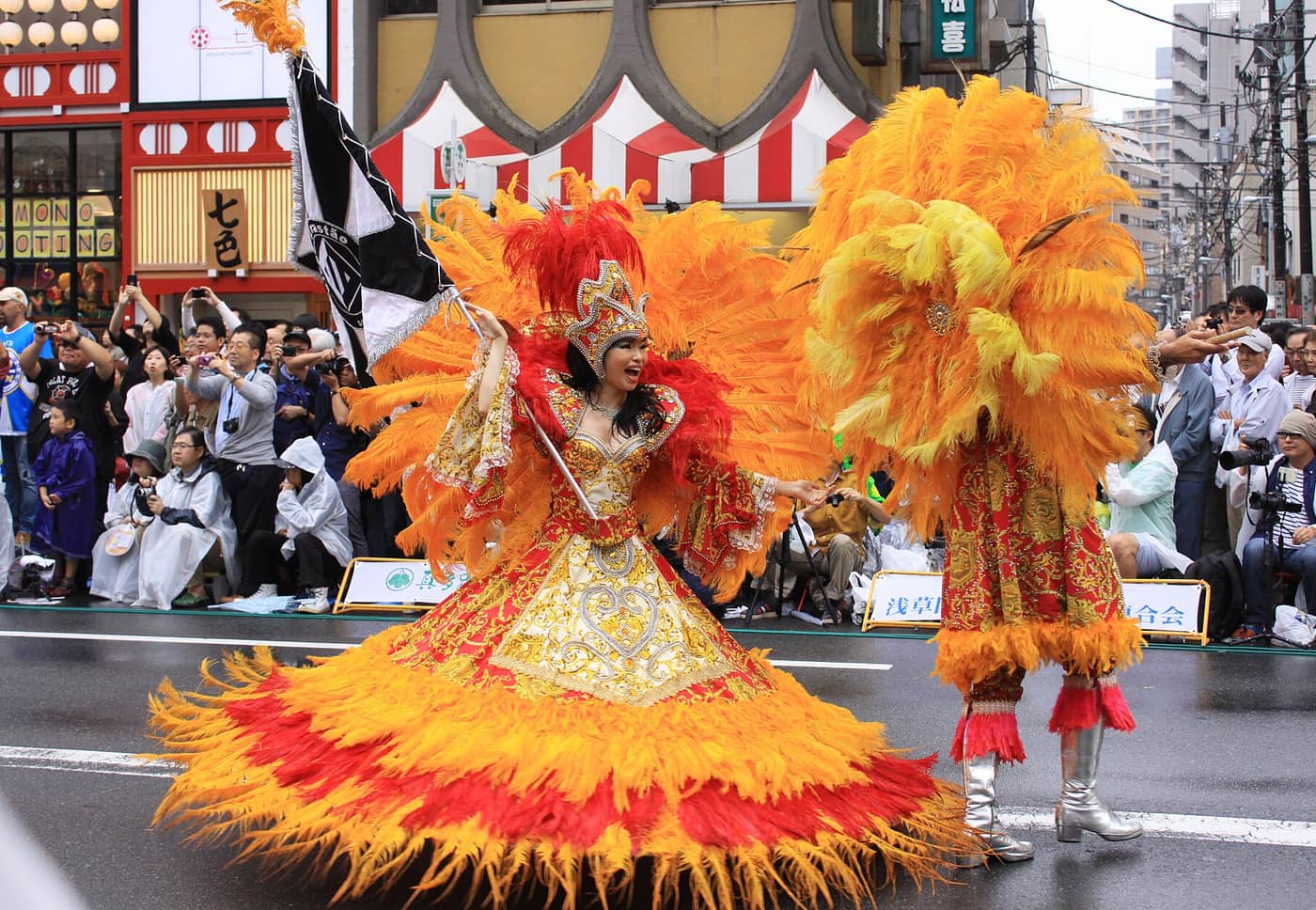
The Asakusa Samba Carnival is a Brazilian-style samba parade and contest through the streets beside Senso-ji Temple, with drum sections, dancers in feathers and sequins, and decorated floats, and teams competing for a league title in front of more than half a million spectators. It began in 1981, when the local comedian Ban Junzaburo proposed it as a way to bring crowds back to Asakusa’s fading entertainment district. Its organisers now bill it as the largest samba carnival in the northern hemisphere.
The 2026 edition, the 41st, was on Saturday 29 August, from 1 PM to about 5:30 PM. The 2025 edition was also on the last Saturday of August (30 August), though the 2024 parade was held in mid-September. The 2027 date hadn’t been announced at the time of writing. If it follows the last two years, expect Saturday 28 August 2027. Treat that as expected until the organising committee publishes it.
Stand on Kaminarimon-dori with the gate behind the dancers, arrive before the 1 PM start, bring sun protection, and stay in Asakusa for the evening that follows.
What happens
Teams parade one after another along a fixed route, each with its own theme, music, costumes, floats, and hundreds of dancers and drummers. Judges score them on the elements of a Rio-style samba school parade, and the teams are split into leagues, with promotion and relegation between them. The top league (S1) teams field 150 or more members each, and they’re the ones with the big floats and the most elaborate costumes.
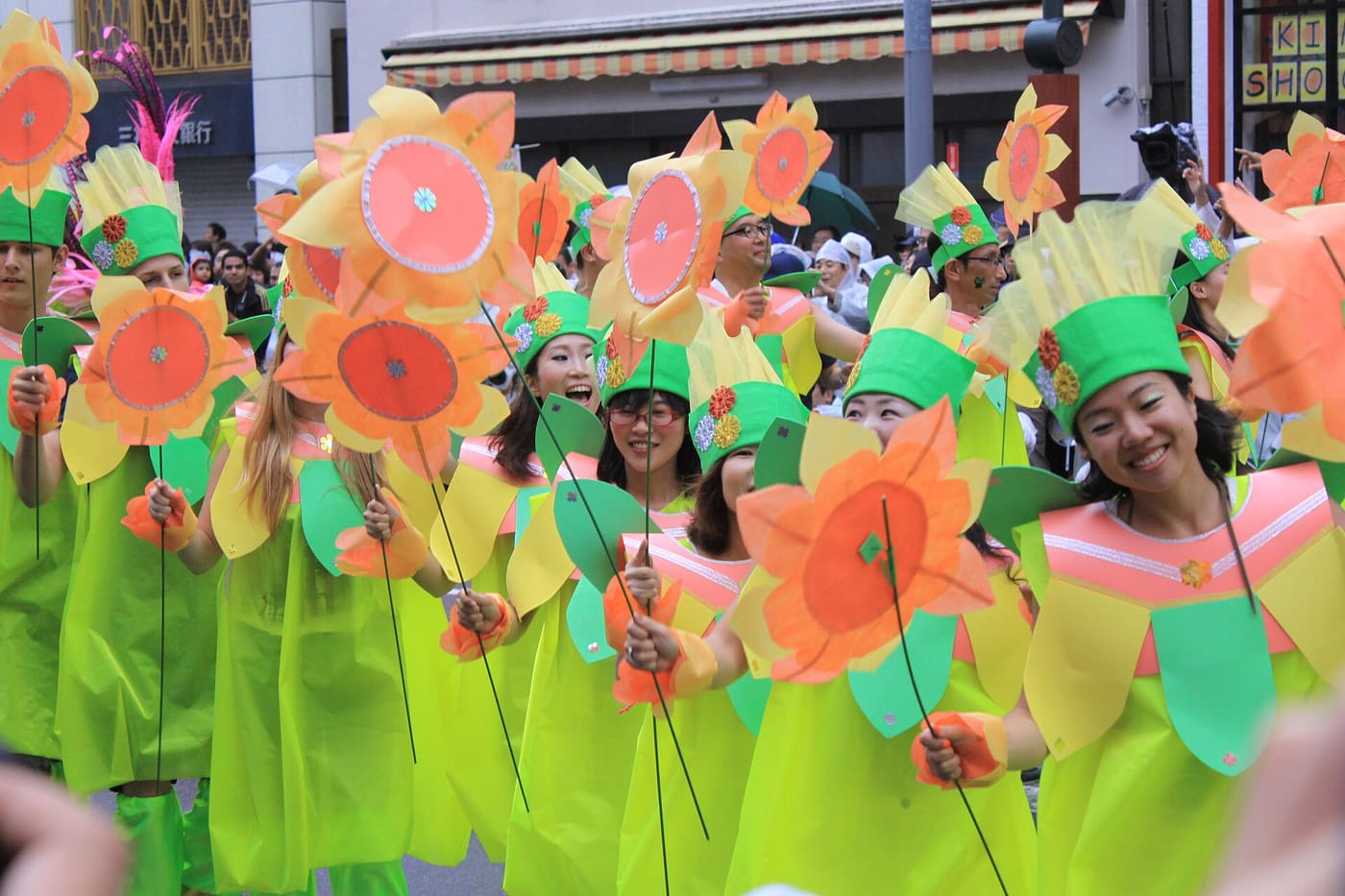
The organisers usually publish the order of teams before the day, so check when the teams you most want to see are due. It’s more like a street party than a matsuri, loud and fast-moving, with spectators dancing along cheerfully at the barriers.
The parade route
The parade runs along two streets that form an L around the east and south sides of the temple district.
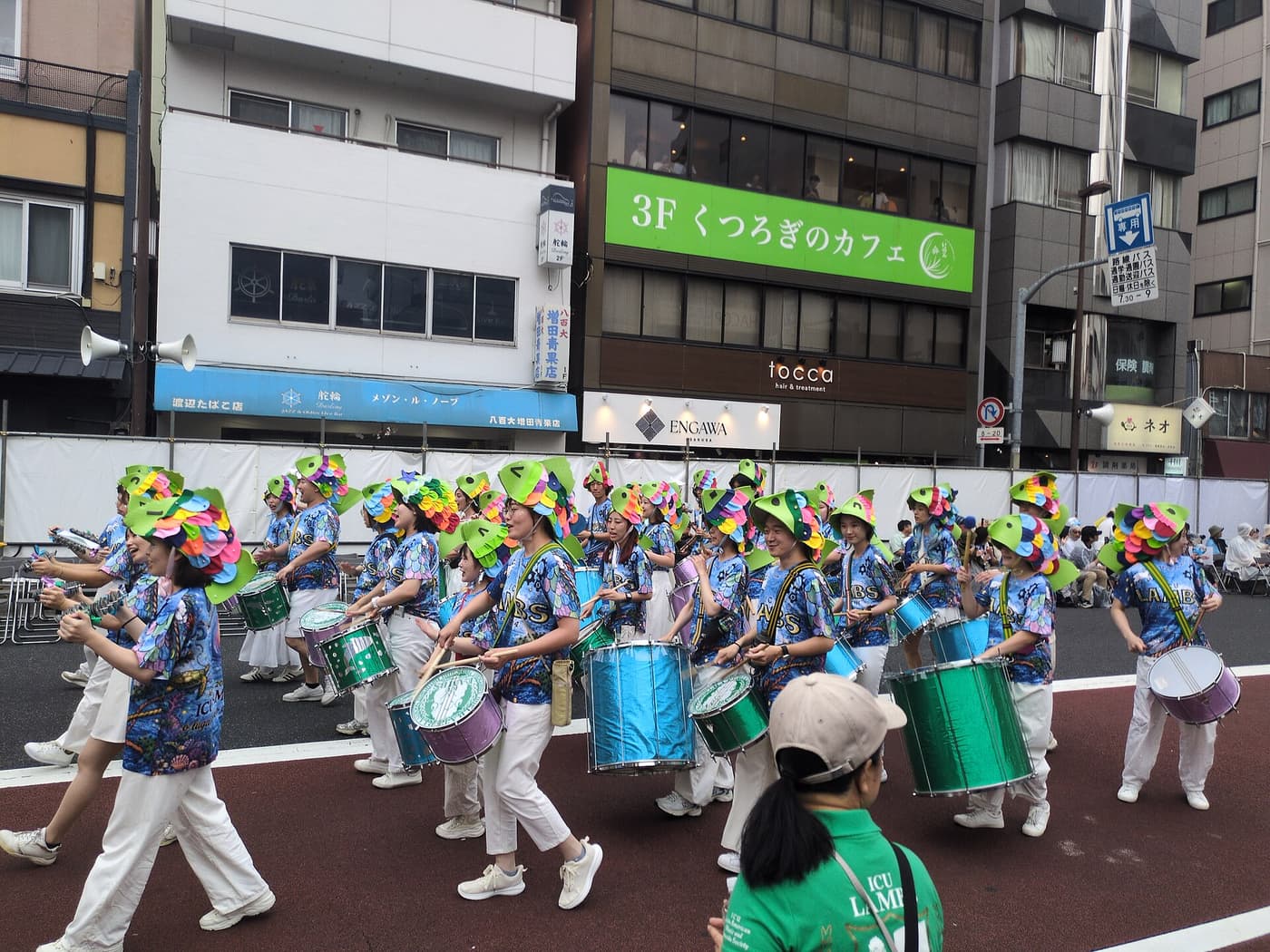
- Umamichi-dori runs north to south along the east side of the temple precinct.
- Kaminarimon-dori runs west past the Kaminarimon gate, at the foot of Nakamise Shopping Street, toward Tawaramachi.
The two roads close to traffic for the afternoon, and you’ll watch from the pavements behind barriers.
Where to watch
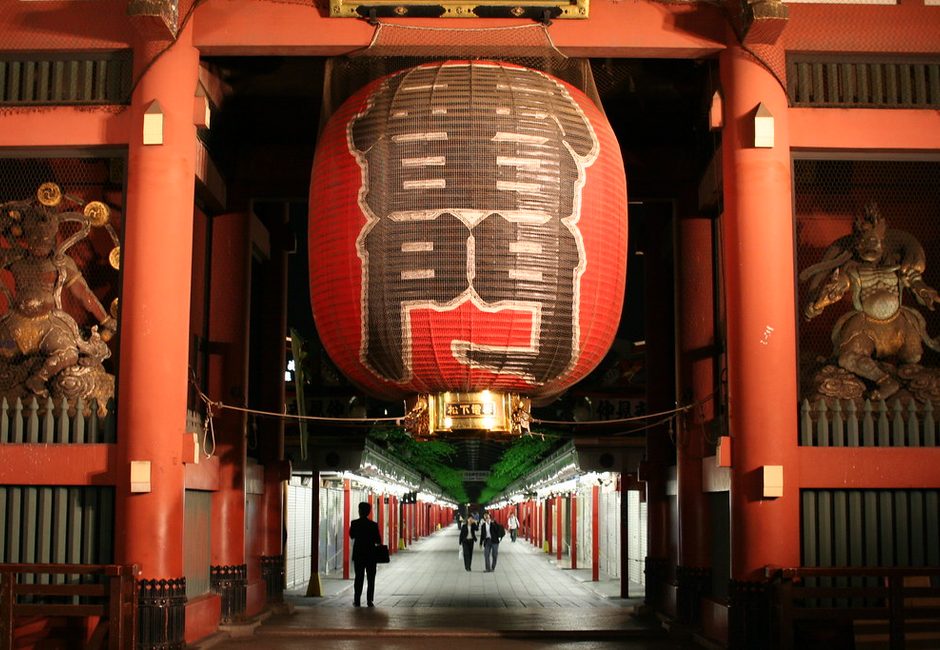
Kaminarimon-dori. The wide avenue in front of the great lantern gate is the classic backdrop and the most crowded stretch. Arrive early and it’s the best place for photographs.
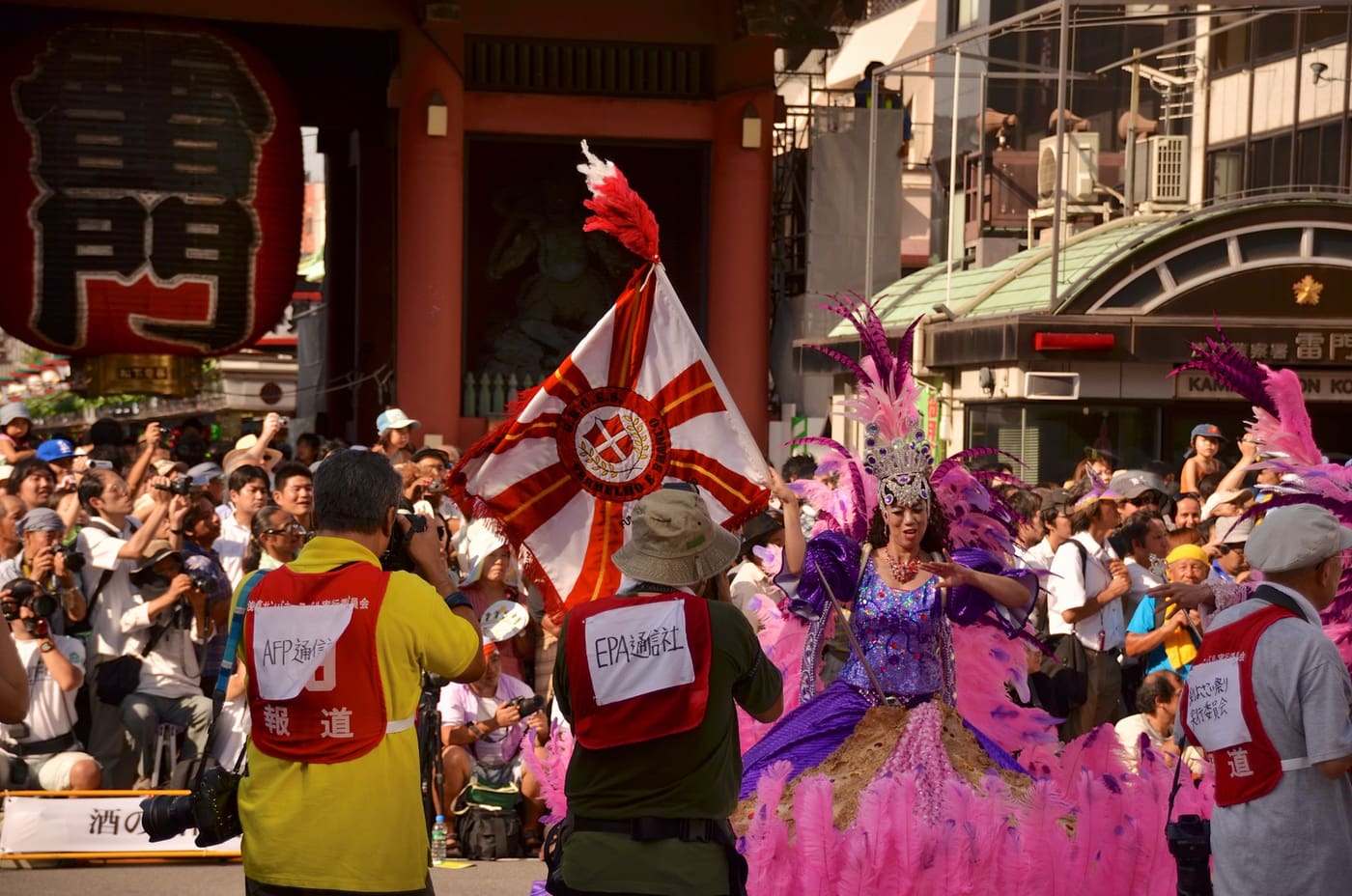
Umamichi-dori. It’s narrower, which puts you closer to the dancers and the drums.
Paid seats. A limited number of paid supporter seats are sold in advance through the organisers (applications for the 2026 seats closed on 10 August), but most people stand, and that’s free.
When to arrive
The parade starts at 1 PM. For a front-row spot on Kaminarimon-dori, arrive by late morning, because the pavement fills well before the start. If you’re happy with the second or third row, turning up around 1 PM is enough. Check the running order if there’s a particular team you want to see.
Heat, rain, and what to bring
Late August in Tokyo is hot and humid, and the parade runs through the hottest part of the day on streets with little shade. Bring a hat, sunscreen, plenty of water, a small towel and a hand fan, and take breaks in air-conditioned shops or cafes. The carnival doesn’t stop for light rain. If the weather looks severe, check the organisers’ site or social accounts.
Getting there and getting away
Asakusa Station (Ginza Line, Toei Asakusa Line and Tobu) sits by the corner where the two streets meet, and it’s extremely busy before and after the parade. Tawaramachi on the Ginza Line, at the western end of Kaminarimon-dori, is often the calmer choice. The Tsukuba Express Asakusa station, on Kokusai-dori to the west, is another option. You can usually only cross the parade route at set points while teams are passing, so decide which side of the street you want to be on before you arrive.
Where to eat nearby
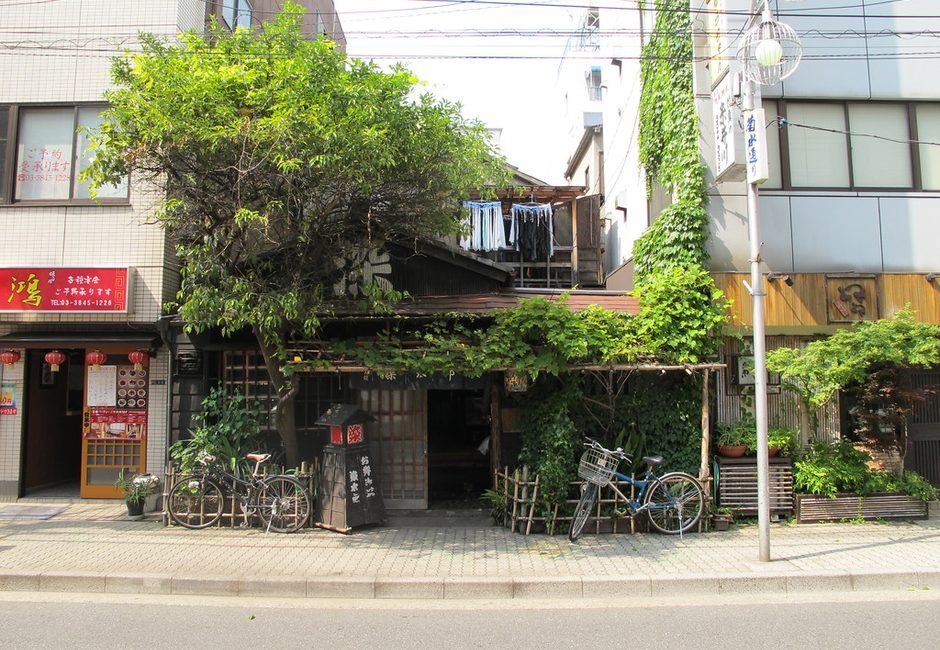
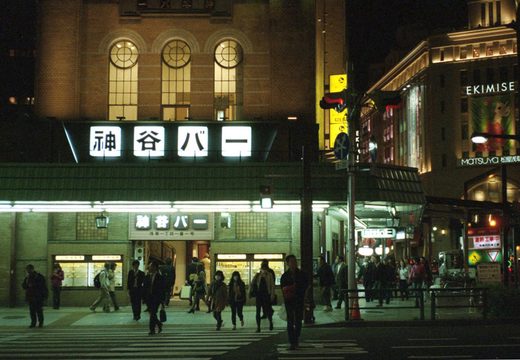
Asakusa’s regular restaurants are busy on carnival day, so eat early or late. Sometaro, the 1937 okonomiyaki house near Tawaramachi, is a short walk from the western end of the route. The open-air izakaya of Hoppy Street, just west of the temple, are the natural place to end up after the parade. Kamiya Bar, by the Azumabashi bridge, has served its Denki Bran brandy since the 1880s. Food and drink stalls set up around the route too.
After the parade
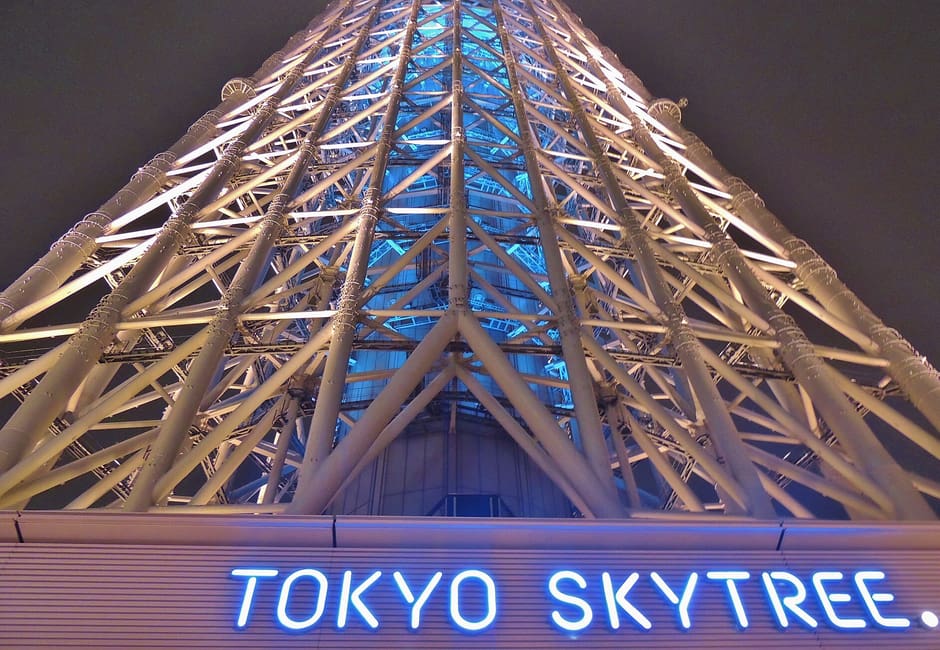
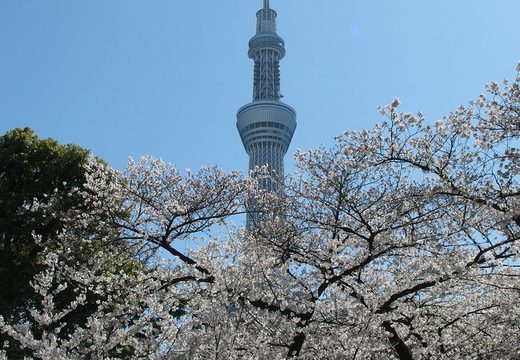
The parade ends late in the afternoon, so you’ve got the evening for the rest of Asakusa. Walk up to Senso-ji as the lights come on, cross the river for the view of Tokyo Skytree from Sumida Park, or head south to Kuramae for coffee and craft shops. The Asakusa neighbourhood guide has the full picture.
In 2026 the carnival fell on the same Saturday as the first day of the Koenji Awa Odori, Tokyo’s biggest dance festival, which starts at 5 PM on the other side of the city. It’s possible to see both in one day, with an early exit from Asakusa and a train across town.
Where to stay for the Samba Carnival
If you’re staying in Asakusa you can watch the parade, go back to cool off, and come out again. The weekly hotel price index puts the Asakusa median at US$239 a night (sampled 29 September 2026, a two-night stay a month out). The Asakusa where to stay guide covers which blocks to book.
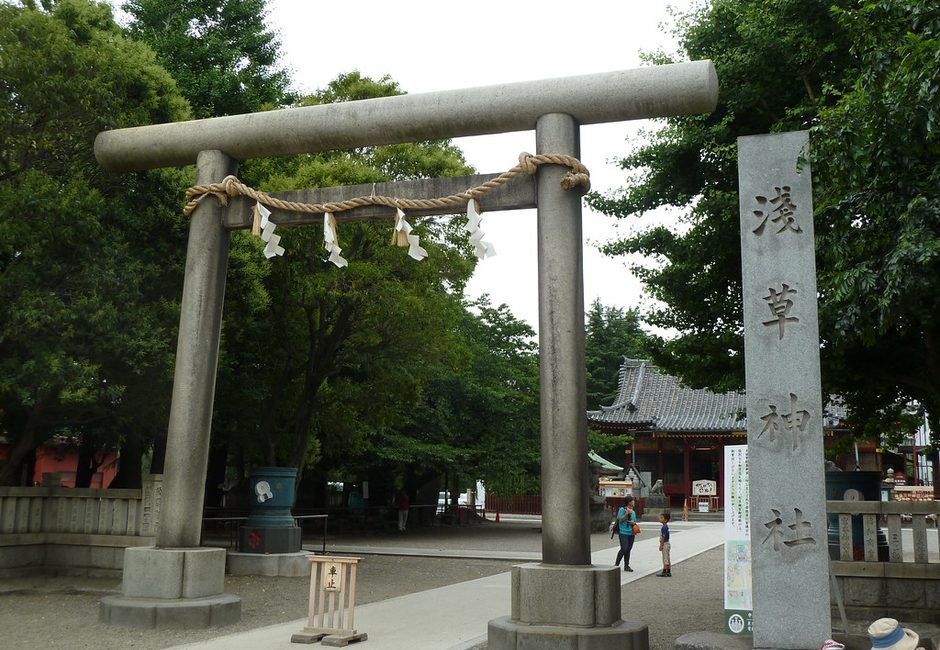
- Kuramae, about 15 minutes south on foot, runs US$184. See the Kuramae guide.
- Ueno, at US$203, is a few stops away on the Ginza Line. The Asakusa vs Ueno comparison weighs the two.
Open the Tokyo travel map with your dates to compare live prices, and check the events calendar for other late-August events.
Frequently Asked Questions
When is the Asakusa Samba Carnival 2027?
The date hadn’t been announced at the time of writing. The 2025 and 2026 editions were held on the last Saturday of August (30 August 2025 and 29 August 2026), which points to 28 August 2027, though the 2024 parade was in mid-September.
Is the Asakusa Samba Carnival free?
Yes. It’s free to watch from the pavement, and a limited number of paid supporter seats are sold in advance.
What time does the Asakusa Samba Carnival start?
The 2026 parade started at 1 PM and ran until about 5:30 PM. The organisers usually publish the order of teams in advance.
Does the Asakusa Samba Carnival happen in the rain?
It doesn’t stop for light rain. If the weather is severe, the organisers post their decision on the day.
Places in this guide
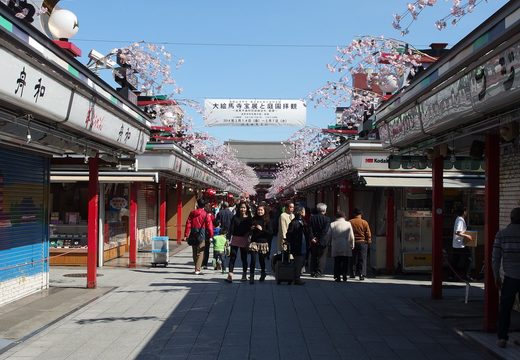
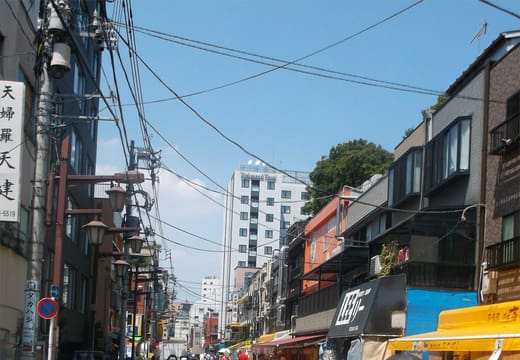
Photos show the actual places, licensed under Creative Commons and credited to their photographers.
Find hotels in Asakusa
Browse live availability and compare prices for your dates.